Cellular PVC (foamed PVC) has become a premier material for the American fencing market due to its wood-like texture and superior rot resistance. However, for manufacturers offering customized color solutions, achieving long-lasting paint adhesion on a sanded surface remains a technical challenge. When the surface of a foamed profile is sanded, the cellular structure is exposed, creating a porous but chemically inert substrate that requires precise handling to prevent peeling or fading.
To ensure professional-grade results and extend the service life of painted PVC fencing, follow this industry-standard protocol:
1. Advanced Surface Preparation
Sanding provides the necessary "mechanical key" for the paint to grab onto. However, sanding also releases static charges and trapped lubricants from the manufacturing process.
* Deep Cleaning: After sanding, the profiles must be wiped with denatured alcohol or a specialized PVC cleaner. Avoid mineral spirits, which leave an oily residue that causes "fish-eyes" in the finish.
* Dust Elimination: Use an ionized air gun to remove fine particles trapped within the micro-pores of the cellular structure.
2. Selecting the Right Coating System
Standard latex or oil-based paints are insufficient for the thermal expansion cycles of PVC.
* AAMA 615 Compliance: Use high-performance coatings designed specifically for vinyl. These paints contain "bite" solvents that chemically fuse with the PVC substrate.
* Solar Reflective Technology: For dark colors (like Espresso or Charcoal), it is mandatory to use Heat-Reflective (IR) pigments. These pigments prevent the dark surface from absorbing excessive heat, which can cause the PVC to warp or the paint to blister.
3. Application and Curing
* Film Thickness: Aim for a dry film thickness (DFT) of 2.0 to 3.0 mils. Applying paint too thick can lead to brittleness and cracking during winter freeze-thaw cycles.
* Controlled Environment: Paint should be applied when the substrate temperature is between 60°F and 85°F (15°C - 30°C).
* The Curing Window: While the paint may feel dry to the touch within an hour, full chemical adhesion to PVC can take 7 to 14 days. Ensure profiles are stored with spacers to prevent "blocking" or sticking during this period.
By adhering to these rigorous standards, your cellular PVC fencing will not only meet the aesthetic demands of high-end residential projects but also withstand the harshest environmental conditions for decades.
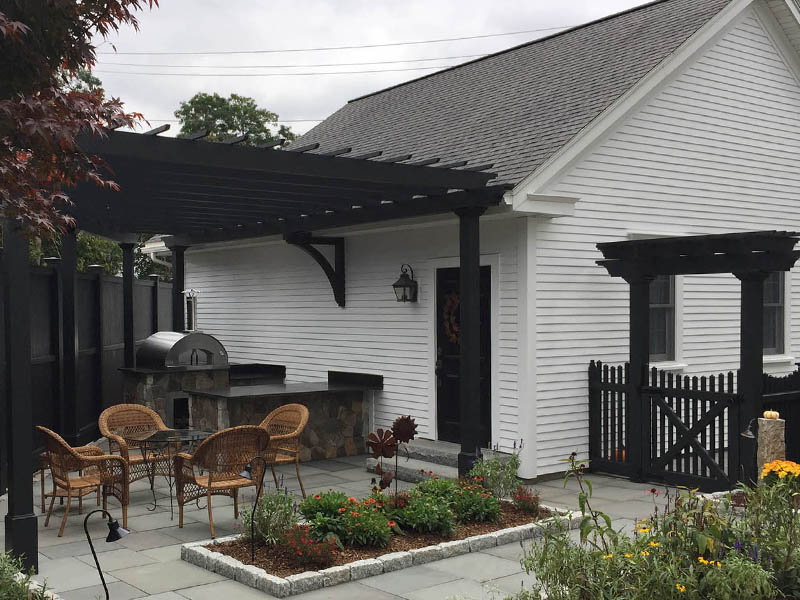
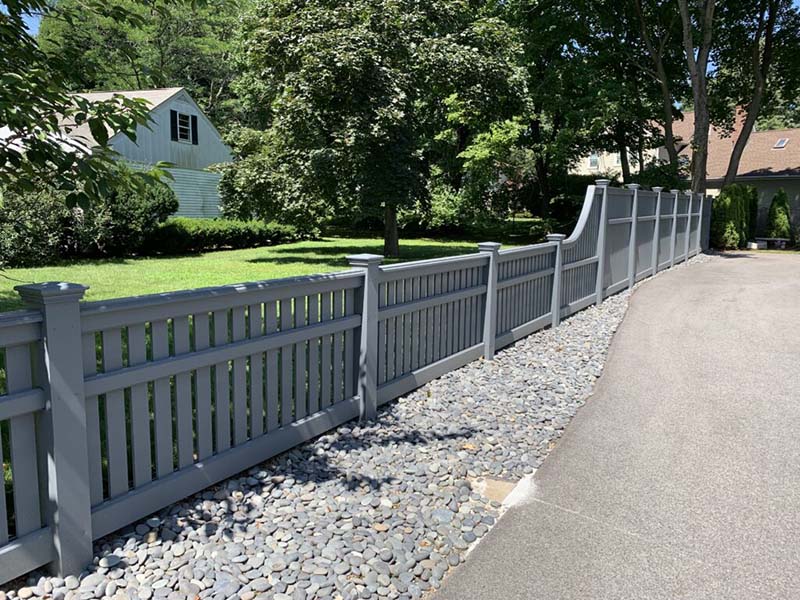
The following projects at New England Areas are all constructed using material from FenceMaster Outdoor Products.
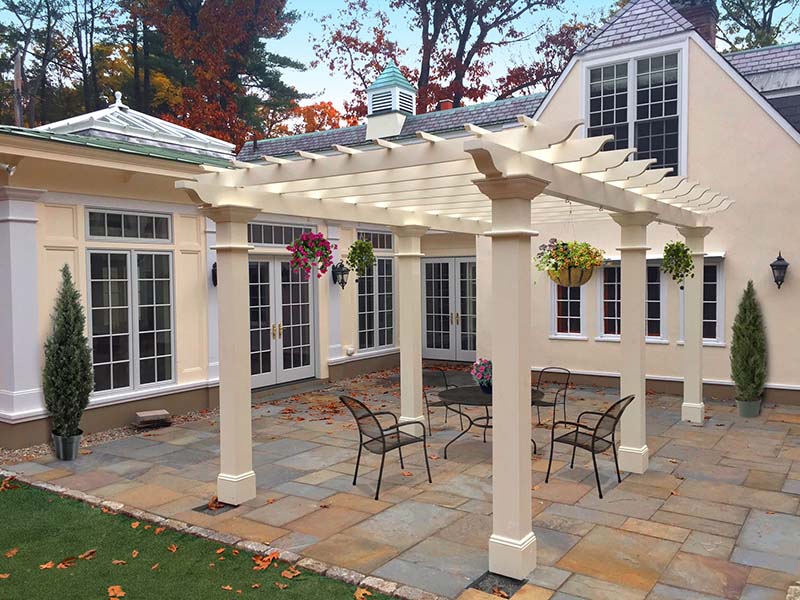
Cellular Vinyl Pergola In Beige
Cellular Vinyl Pergola In Black
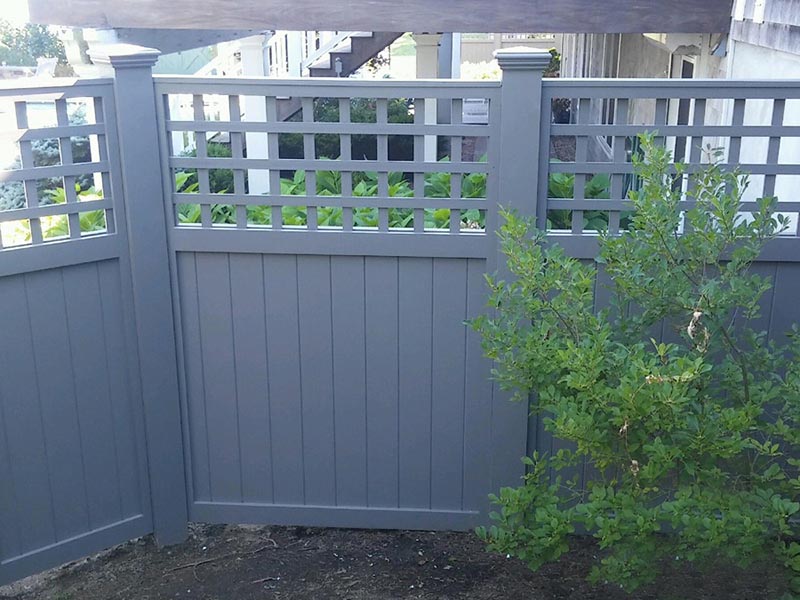
Cellular Vinyl Fence In Grey
Cellular Vinyl Fence In Grey
Post time: Mar-30-2026